Tiled roofing made to handle the weather
Correct gauge and lap
We space and overlap tiles to suit the profile, pitch and fixing pattern.
Tile weight considered
We match clay or concrete options to the roof structure and required finish.
Edges properly completed
We finish ridges, verges and valleys as working parts of the tiled roof.
Tiles fixed as a complete weatherproof system
Roof tiles do their job through overlap, correct spacing and secure fixing rather than weight alone. We install tiled coverings on new roofs, replacements and pitched extensions, starting with suitable underlay and battens. For roof tiling in Northampton, we consider the roof angle, structure and appearance before choosing a profile. Clay and concrete tiles differ in weight, colour and minimum pitch, so the building must guide the decision. Correct gauge and lap help resist wind-driven rain, while the fixing pattern limits movement. A neat field of tiles is only useful when the layers beneath and the edges around it work just as well.
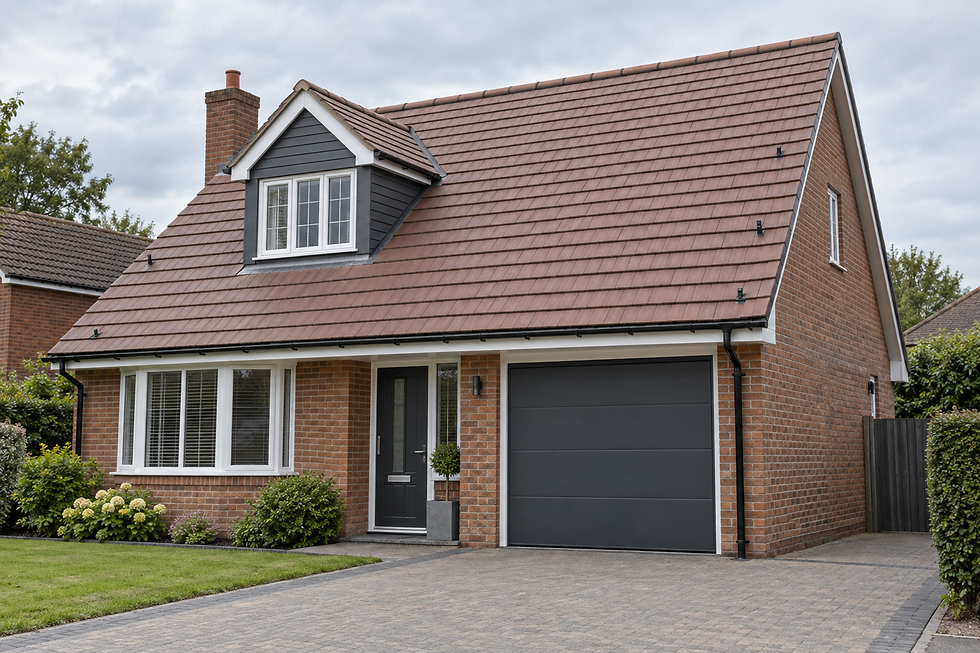

Ridges, hips and valleys finish the protection
The main slopes may cover most of the roof, but water often tests the changes in direction. We complete ridge, hip, verge, valley and wall details to suit the selected tile system. At an abutment, the covering must connect with leadwork or another suitable detail that turns rain back onto the tiles. When only a few tiles are cracked or displaced, a limited repair may be sensible. Widespread surface wear, repeated movement or problems beneath the covering can point towards renewal. We inspect enough of the roof to distinguish one damaged patch from a tiled system that has reached the end of practical repair.
Frequently asked questions
Should we choose clay or concrete roof tiles?
The choice depends on roof pitch, structure, tile weight, profile and the appearance you want. Compatibility with the building comes before colour alone. We compare suitable options and explain how each affects the roof specification.
Can you replace only a few broken roof tiles?
Yes, when the nearby covering and layers beneath remain sound. A small number of damaged or displaced tiles can often be repaired locally. If failures are spread across the slopes, we'll explain why a wider renewal may be more economical.
Why does tile spacing matter?
Tiles rely on the correct gauge and lap to guide rain over the roof. Poor spacing can reduce the overlap and leave the covering more exposed to wind-driven water. We set out battens and fix tiles for the selected profile and roof angle.